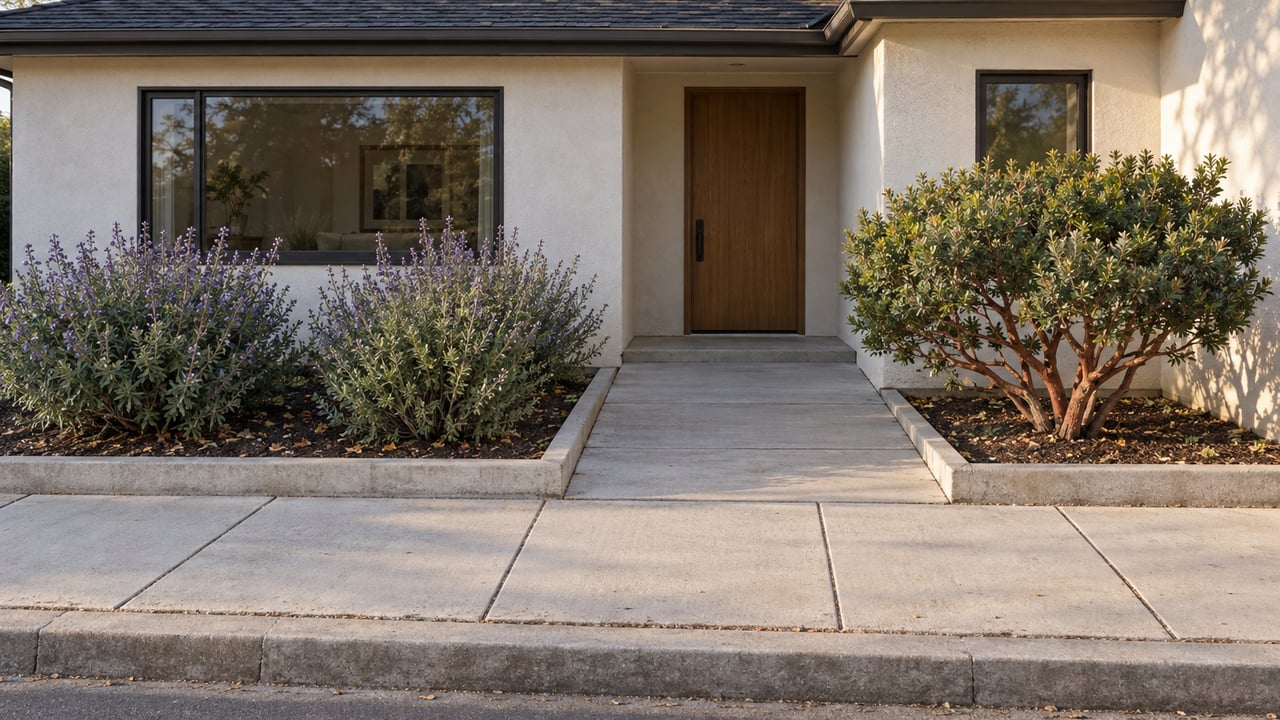
A seller in the West End lists a bungalow built before 1950, the kind of house that still has its original clay sewer lateral running under the front yard. A contractor comes out to scope the pipe before escrow opens, and quotes for the full run from the house to the public sewer main under the street, the way the job would be priced in Oakland or Berkeley. That quote is wrong, and not in the seller's favor. In Alameda, the owner's responsibility for that pipe stops at the property line. The city owns the rest.
That distinction sounds small. It is not. It changes what a seller actually needs to test, what a contractor should actually bid, and how much of the pipe a buyer's inspector can flag as the seller's problem. Get the boundary wrong and you either pay to fix a pipe that was never yours to fix, or you assume you're covered when you're not.
The rule that brings this up in the first place
Alameda sits inside the East Bay Municipal Utility District's Regional Private Sewer Lateral Program, the same program that covers Oakland, Emeryville, and Piedmont. The program requires a Compliance Certificate for the private sewer lateral, the underground pipe connecting a home's plumbing to the public sewer system, whenever one of three things happens:
- The property is sold
- A remodel permit is pulled for work valued over $100,000
- The water meter size is changed
Selling a home is the trigger that catches most people. Escrow does not close without a valid certificate on file, or without a documented plan to get one within a set window after closing. Berkeley runs a separate program with its own trigger list (sale, a major remodel permit, or a public nuisance finding), so if a property sits in Berkeley the rule is similar in spirit but administered by the city directly rather than through EBMUD.
Alameda draws its line differently
Here is the part that gets missed. In most of the EBMUD program's cities, the property owner is on the hook for the entire lateral, from the house all the way to the connection at the public main under the street. That is the assumption most contractors, inspectors, and even out-of-area agents carry into a listing.
Alameda and Albany are the exceptions. In these two cities, the owner's certified responsibility ends at the property line, or at the curbside cleanout, covering what the program calls the upper lateral only. The segment from that point to the main, the lower lateral, belongs to the city rather than the homeowner.
| City | Owner's certified responsibility | Program |
|---|---|---|
| Alameda | Upper lateral only, house to property line | EBMUD Regional PSL |
| Oakland | Entire lateral, house to main | EBMUD Regional PSL |
| Emeryville | Entire lateral, house to main | EBMUD Regional PSL |
| Piedmont | Entire lateral, house to main | EBMUD Regional PSL |
| El Cerrito | Entire lateral, house to main | EBMUD Regional PSL |
| Berkeley | Entire lateral, house to main | City of Berkeley's own program |
The practical effect in Alameda is that a shorter section of pipe needs to pass inspection, which can mean a smaller repair scope and a smaller bill if something is wrong. But it also means the paperwork looks different. A contractor who defaults to scoping the whole run to the main, out of habit built from Oakland jobs, will scope more pipe than the certificate actually requires. That is not a minor inefficiency. It can shift a repair estimate by thousands of dollars, and it can eat time in escrow that a seller does not have.
What the certificate is actually worth once you have it
The Compliance Certificate is not a one-time hoop to jump through. Once issued, it has a shelf life:
- 20 years if the lateral was completely replaced and passed its verification test
- 7 years if the lateral was repaired, or passed inspection with no work needed
Certificates transfer with the property. A seller who replaced their lateral eight years ago does not need new work done, and does not need to change the certificate into the buyer's name. That certificate simply rides along with the sale as long as it has not expired, which is worth checking before assuming a listing needs fresh plumbing work at all.
What happens when the pipe fails the test mid-escrow
Not every lateral passes on the first try, especially in a city with a meaningful share of pre-1950s housing stock and original clay pipe. When a pressure test fails and there is not enough time left in escrow to complete a repair, EBMUD offers a Time Extension Certificate instead of forcing a delay. The mechanics are specific:
A refundable deposit of $4,500 is placed with EBMUD. That buys 180 days after closing to complete the required work and obtain the actual Compliance Certificate. If the work gets done in that window, the deposit comes back. If it does not, EBMUD keeps the funds, completes the repair itself, and bills anything beyond that amount back to the property owner, or places a lien.
Buyers and sellers negotiate between themselves who is actually responsible for getting the certificate, whether that means the seller completes repairs before close, the seller credits the buyer, the price adjusts, or the deposit and repair obligation transfer to the buyer after closing. None of that negotiation is unusual. What catches people is the assumption that a failed test kills the deal. In practice it rarely does, as long as someone at the table knows the Time Extension mechanism exists and asks for it early enough to matter.
Sewer lateral replacement across the Bay Area currently runs roughly $8,000 to $18,000 for most homes, or about $150 to $300 per foot once permits, shoring, and surface restoration are counted, according to a 2026 Bay Area plumbing cost guide. In Alameda, because only the upper lateral needs to be tested and certified, the actual repair scope for a passing certificate can land on the shorter, less expensive end of that range compared to a similar job in Oakland where the full run to the main is in play.
Why this shows up more often in certain Alameda blocks
Alameda's downtown and the West End carry a dense concentration of homes built before 1930, with historic architecture that predates modern plumbing materials by decades. Clay and cast iron laterals from that era are exactly the kind of pipe that tends to develop root intrusion, offset joints, or cracked sections over time. That does not mean every older Alameda home has a failing lateral. It means the odds of a first-time pressure test flagging something go up with the age of the house, which is worth knowing before a listing goes live rather than after an offer is already in hand.
What this means if you're getting ready to list
A sewer lateral inspection before listing, rather than waiting for a buyer's inspector to find something mid-escrow, does two things. It gives a seller the camera footage and the time to fix anything the district would flag, on a timeline the seller controls. And in Alameda specifically, it clarifies exactly how much pipe is actually the seller's problem before a contractor's quote assumes the wrong scope.
Confirming an existing certificate is often the faster first step. If a lateral was replaced or repaired within the certificate's validity window, whether under Alameda's own program history or EBMUD's, that paperwork may already satisfy the requirement without new work. Checking that record before ordering a new inspection can save both time and money.
FAQ
Does a Compliance Certificate transfer to a new owner? Yes. Certificates remain valid until their printed expiration date regardless of who owns the property, and there is no requirement to change the name on the certificate after a sale.
Who decides whether the buyer or seller gets the certificate? That is a negotiated point in the purchase contract, not something EBMUD assigns. Sellers often complete the work before listing to avoid last-minute delays, but responsibility can shift to the buyer as part of the deal terms.
Does this apply to condos and other shared developments? Yes, with adjusted rules for shared laterals. Condominiums, HOAs, and other common interest developments follow separate guidelines under the same regional program, since a single lateral may serve multiple units.
What if my property backs up to a rear or side yard sewer main instead of the street? Alameda's ordinance treats the full lateral as the upper lateral in that case, meaning the property owner's certified responsibility extends to that rear or side yard connection rather than stopping at a street-facing property line.
If you're thinking about listing a home in Alameda and want a clear read on where this rule actually applies to your property, reach out to the Chris Clark Team for a complimentary home valuation and a straight answer on what your escrow timeline should look like.