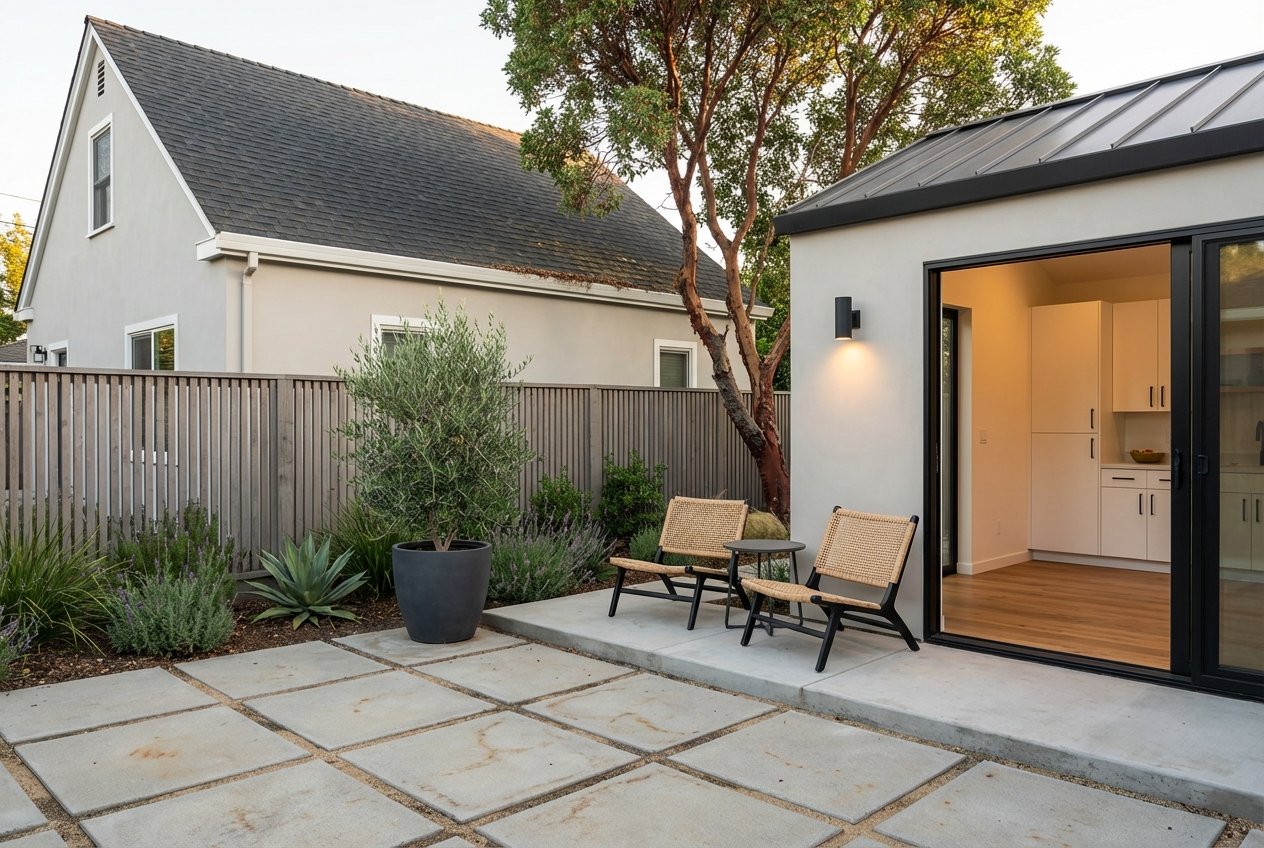
Thinking about adding an accessory dwelling unit to your Berkeley property to boost value or offset your mortgage? You are not alone. In a high-cost, high-demand market, ADUs can create flexible living space and steady rental income. In this guide, you will learn how ADUs tend to affect resale value, what local rules you need to know, and how to document income so appraisers and lenders can count it. Let’s dive in.
What counts as an ADU in Berkeley
Berkeley allows both Accessory Dwelling Units and Junior ADUs on lots where residential use is permitted. That includes single-family, duplex, and multi-family parcels. The city aligns with state law and offers pre-approved designs to help shorten timelines and reduce soft costs. You can review current rules, eligibility, and steps on the city’s page for new ADU rules and resources.
Two ADU types matter for value and rules:
- ADUs: Independent units with a kitchen and bath. These do not generally have an owner-occupancy requirement under state law.
- JADUs: Smaller units created from existing space. These can have different owner-occupancy requirements than ADUs, depending on setup and code specifics. For statewide guidance, see California’s HCD ADU overview.
How ADUs increase property value
Income capitalization
A permitted, rent-producing ADU creates income that appraisers can convert into value. With leases or a rent schedule in hand, appraisers can apply an income or gross-rent multiplier approach. Lenders often accept ADU rental income when it is well documented, subject to underwriting limits and evidence requirements described in FHA and agency guidance. For documentation standards, see the summary of mortgage underwriting rules on ADU income.
Functional amenity premium
Even if you do not plan to rent, many buyers in high-cost areas value a separate living space for multigenerational living, a guest suite, or a home office. That flexibility can translate into a premium at resale. Surveys of ADU owners and market behavior support this amenity value, especially in tight Bay Area markets. The Terner Center’s Bay Area findings highlight buyer demand for flexible space and rental options in its ADU owner survey.
Immediate equity vs longer payback
A permitted ADU can add immediate appraised value once complete. If you rent it, recurring income can shorten the payback period and help with carrying costs. Alameda County’s guidance explains that value is added to your assessment as new construction rather than triggering a full reassessment of the entire property, which influences both equity and taxes. See the county’s overview of budgeting and tax treatment.
Costs, rents, and realistic ROI
Construction costs vary widely in Berkeley due to site constraints, utility upgrades, and finish choices. A statewide median build cost of about 150,000 dollars, roughly 250 dollars per square foot, appears in a recent ADU owner survey. In the Bay Area, many detached or ground-up ADUs commonly run higher, often in the 200,000 to 500,000 plus range depending on scope. The Terner Center provides helpful context on typical costs and rents.
On the income side, the Bay Area’s median rent for new ADUs reported in the same survey is about 2,200 dollars per month. Simple framing: 2,200 dollars per month is 26,400 dollars per year in gross income. Your net return depends on vacancy, management, insurance, maintenance, utilities, and property taxes added for the improvement. Garage or interior conversions are often the most cost-efficient paths to reach a shorter payback period.
Berkeley rules that affect value
Ministerial review and timelines
Under state law, ADU applications are reviewed ministerially, without a discretionary public hearing. A 60-day decision timeline applies after your application is complete. The city also sends a courtesy notice to nearby properties, funded by a small mailing fee paid with your building permit. You can read more about statewide process standards in the HCD ADU guidance.
Deed restrictions, short-term rentals, and separate sale
Berkeley records a deed restriction as part of ADU and JADU permits. Among other things, it prohibits rentals of fewer than 30 days and generally limits separate sale of the unit. The city has moved to enable the state’s AB 1033 pathway for limited separate conveyance in specific contexts, so check the local implementation if separate sale is a goal. Details appear in the Berkeley Municipal Code section on ADUs.
Owner-occupancy rules for JADUs
State law largely bars owner-occupancy requirements for standard ADUs, but some JADU configurations in Berkeley can require an owner occupant. That distinction matters for financing, operations, and resale positioning. For statewide definitions, see the HCD ADU overview.
Parking, conversions, and electrification
State protections limit parking requirements for ADUs, especially when converting existing garages or building near transit. Berkeley’s rules generally align with these protections. New ADUs are also subject to local electrification reach codes, which can influence design and cost. Review a summary of these statewide protections and code updates in this ADU policy explainer.
Taxes, financing, and insurance
Property tax treatment
When you add an ADU, the county typically performs a partial reassessment. Under Proposition 13, assessors usually add only the value of the new construction to your base rather than reappraising the whole property at market. That means your tax increase is tied to the ADU’s assessed value, which is determined case by case. Alameda County outlines this blended approach in its ADU budgeting guide.
Financing options and using ADU income
Common funding routes include cash, a construction loan or construction-to-perm loan, a HELOC, or a cash-out refinance. State programs like the CalHFA ADU Grant can help eligible owners with predevelopment and soft costs. Many lenders will consider ADU rent for qualification if you provide documentation such as an appraisal rent schedule, leases, and tax schedules. Underwriting frameworks and percentage rules are detailed in FHA and agency guidance.
Insurance and operating costs
Plan to update your homeowners insurance to reflect the new structure and added liability. If you plan to rent the ADU, ask about landlord coverage or policy endorsements. Expect higher ongoing costs for maintenance, utilities, and insurance. Early contact with your insurer helps confirm coverage scope and premium changes.
Permitted vs unpermitted units
Permitted ADUs add value more reliably. Appraisers and lenders typically exclude undocumented improvements, which can reduce buyer confidence and limit financing options. Berkeley’s amnesty pilot, running from January 1, 2025 to December 31, 2028, gives owners of certain pre-2020 unpermitted units a confidential path to safety inspections and legalization. Legalization can unlock value that was not previously recognized. Learn more about the ADU amnesty program.
Buyer demand and local activity
ADUs are becoming more common in Berkeley. Local reporting counted about 95 permitted ADUs in 2023, with several hundred permits since 2016. The city is also advancing policies that may allow limited separate sale in certain conditions, which could influence future liquidity. See Berkeleyside’s coverage of recent policy shifts and permit trends in its report on ADUs in Berkeley.
At the same time, the premium for a home with a permitted ADU varies by neighborhood, unit quality, and comparable sales. The Terner Center’s research emphasizes that while premiums are common in high-demand markets, local conditions drive outcomes. You can explore those findings in the ADU owner and market survey.
Choose the right ADU for your lot
Conversions vs detached builds
Garage and interior conversions often deliver the best cost-to-value ratio because you are reusing structure and utilities. Detached cottages allow more size and privacy, which can support higher rent, but they typically cost more due to foundation, utility, and site work. Site factors like slopes, sewer upsizing, and access for construction can shift the equation.
Design and documentation that supports value
- Build permitted and keep a clean paper trail. Finaled permits, a certificate of occupancy, and clear plans make appraisal and buyer due diligence easier.
- If you rent, document income. Leases, Schedule E tax records, and an appraisal rent schedule are often needed for lenders to count the income.
- Choose durable, rental-friendly finishes and clear unit separation for privacy where possible. Functional design choices can improve rentability and buyer appeal.
Quick pre-build checklist for Berkeley owners
- Confirm feasibility: zoning, setbacks, lot coverage, and any special site issues like creeks or landmark status. Start with the city’s ADU rules and resources.
- Pick the right type: conversions frequently cost less and can appraise more reliably than high-cost detached builds. Use local estimates and the Terner Center’s cost baselines.
- Plan to document rent: final permits, leases, and tax records make appraisals and lending smoother. Review underwriting documentation standards.
- Understand deed restrictions and sale limits: Berkeley records prohibitions on rentals shorter than 30 days and outlines narrow pathways for separate sale. See the city’s code section.
- Estimate taxes and insurance: expect a partial reassessment tied to the ADU’s value and request updated insurance quotes. See Alameda County’s assessment overview.
When an ADU may not boost value
Not every ADU creates a large premium. Unpermitted or poorly documented units often do not count in appraisal. Expensive builds on challenging sites can stretch payback periods if local rents do not match the cost. Premiums also depend on active comparable sales that buyers and appraisers can rely on, which can vary by neighborhood and season.
Ready to evaluate how an ADU might impact your home’s sale price or your next purchase strategy in Berkeley? Get local insight, pricing guidance, and a clear go-to-market plan. Request a complimentary home valuation from the Chris Clark Team.
FAQs
Will adding an ADU always raise my sale price in Berkeley?
- Not always. Permitted ADUs with documented income or clear utility as living space commonly add value, but the premium depends on permit status, unit quality, comparables, and buyer demand. The Terner Center discusses the variability in its ADU survey.
How much will my property taxes increase after building an ADU?
- Alameda County typically applies a partial reassessment, adding the ADU’s assessed value to your existing base rather than resetting your whole property to market. The exact increase depends on the assessor’s valuation of the improvement. See the county’s ADU budget guidance.
Can I rent my Berkeley ADU on a short-term basis, like Airbnb?
- Berkeley records a deed restriction that prohibits rentals of fewer than 30 days for ADUs and JADUs issued under the permit process. Always check your recorded deed restriction and the city’s code before planning short-term rentals.
Will lenders count ADU rent when I apply for a loan or refinance?
- Lenders can consider ADU income if it is documented with items like an appraisal rent schedule, leases, and tax forms. Underwriting frameworks limit how much can be counted and set documentation requirements. Review the summary of FHA and agency guidance.
What is the permit timeline for ADUs in Berkeley?
- ADU permits are reviewed ministerially under state law, with a 60-day decision timeline after a complete application. Berkeley also sends a courtesy neighbor notice funded by a small mailing fee. For statewide process details, see the HCD ADU guidance.